Nearly 10% of the global cigarette trade is illicit; this is significantly higher in low and middle-income countries, reaching up to 50% and above. This makes Illicit tobacco trade a worldwide danger to public health and economy.
Among the negative consequences of illicit trade are:
Track and trace systems of tobacco products will become obligatory in the EU by 20 May 2019 due to the implementation of Art. 15 and 16 of the Tobacco Products Directive (2014/40/EU) (10). They are also due for implementation globally based on Art. 8 of the WHO FCTC Illicit Trade Protocol.
Track and trace systems are successfully used to control tobacco production and trade in several countries in the world by determining the current and past locations, the time and status and other information of a unique item. They are shown to significantly increase tax collection, create new legal businesses, improve public health and consequently decrease smoking prevalence.
Read more about track and trace systems and the tobacco industry’s internal controlling systems CODENTIFY and INEXTO in the new ENSP fact sheet Tracking and tracing to fight illicit trade in tobacco products.


A Europe that fails to protect its children from nicotine addiction is undermining not only their health and potential, but also its own future competitiveness. Across Europe and around...
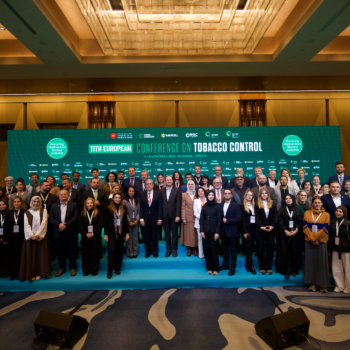
The 11th European Conference on Tobacco Control concluded with a shared commitment and a clear message to the international community. Adopted by ENSP and the Turkish Green Crescent, the...

At the 11th European Conference on Tobacco Control in Istanbul, the Director of the Division of Prevention and Health Promotion at WHO Europe, Dr Kremlin Wickramasinghe, delivered a powerful...

